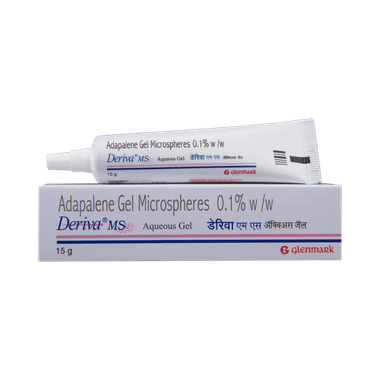
Adina 0.1% Gel is a medication used in the treatment of mild to moderate acne (pimples) with blackheads/whiteheads and small, inflamed spots on the face, chest, or back. It works by reducing excessive oil production in the skin, thereby reducing inflammation or cleaning the blocked pores.
Use Adina 0.1% Gel as prescribed by your doctor in the dose and duration specified. Do not use a larger amount or for longer than the prescribed duration. While on treatment, avoid unnecessary sun exposure and cover the treated areas with clothing or use a sunscreen before stepping out in the sun.
Common side effects of Adina 0.1% Gel include dry skin, skin irritation, burning sensation, or redness. If any of these side effects persist or worsen, consult your doctor. They may be able to guide you on how to manage or treat the side effects.
Adina 0.1% Gel should not be used during pregnancy, as it may cause harmful effects to the developing baby. Consult your doctor if you are pregnant or planning to get pregnant. This medicine should not be used in children below 12 years of age. Avoid applying it to broken, sunburnt, or eczema skin.
Adina 0.1% Gel helps treat clear acne (pimples) and prevent new lesions. It works by reducing the production of excessive oil in the skin. It usually takes a few weeks to have a noticeable effect. Keep using it even if it appears not to be working. Sometimes acne may get worse before it gets better; however, with proper use, your skin will get clearer.
Side effects of Adina Gel
Most side effects do not require any medical attention and disappear as your body adjusts to the medicine. Consult your doctor if they persist or if you’re worried about them
Common side effects of Adina
Erythema (skin redness)
Dry skin
Skin burn
How to use Adina Gel
This medicine is for external use only. Use it in the dose and duration as advised by your doctor. Check the label for directions before use. Clean and dry the affected area and apply the gel. Wash your hands after applying, unless hands are the affected area.
How Adina Gel works
Adina 0.1% Gel is a retinoid-like medicine that works inside skin cells to normalise how they grow and shed, helping prevent blocked pores (microcomedones) and reducing inflammation in acne.
Safety advice
Alcohol
No interaction found/established
Pregnancy
UNSAFE
Adina 0.1% Gel is highly unsafe during pregnancy. It can cause serious harm to the unborn baby, including birth defects and pregnancy loss. Do not use this medicine if you are pregnant or planning to become pregnant.
Breast feeding
SAFE IF PRESCRIBED
Available human data suggest that the drug does not pass into breast milk in clinically significant amounts and is unlikely to harm the infant. To avoid any contact with your baby, do not apply it to the chest area.
Driving
No interaction found/established
Kidney
No interaction found/established
Liver
No interaction found/established
What if you forget to take Adina Gel?
If you miss a dose of Adina 0.1% Gel, apply it as soon as possible. However, if it is almost time for your next dose, skip the missed dose and go back to your regular schedule.
All substitutes
For informational purposes only. Consult a doctor before taking any medicines.
Avoid getting it in your eyes or mouth. If this happens, rinse with water immediately.
Avoid getting any cosmetic procedures done without consulting your doctor first.
Do not use on cuts, abrasions, sunburnt, or eczema skin.
This medicine is not recommended for children under 12 years.
It is not suitable for severe acne involving large body areas.
If severe redness/peeling occurs, reduce frequency or stop and consult your doctor.
Fact Box
Chemical Class
Retinoids
Habit Forming
No
Therapeutic Class
DERMA
Action Class
Retinoids- Third generation
Patient concerns
Good evening sir iam degree student iam suffering from memory loss konchem gurthu untundi avarin adina chepte ventane marchipotha simple ga cheppalante mathimarupu baga undi sir any matter deep ga alochista sir alochanalu vastune untai sir plzz give your suggestions
Dr. Jyoti Kapoor Madan
Psychiatry
I can only respond to the message in English- Memory/ cognitive disturbances in younger age especially inability to recall recent events like where you kept something are more often caused by stress and preoccupation rather than a neurological problem. Nervousness and anxiety makes one not concentrate adequately leading to forgetfulness. Students often complain of not being able able to remember what they read. This is often the result of too much stress/ tension. Identify your stressors and learn to relax. Take time off. When not able to recall something, don't get all frantic about it, leave the effort for a while and relax. It will cure the memory issues. If you are unable to do that, seek professional help.
hello ma, im suffering from severe acne im under medication from last two months, im taking resoten capsules and aapplying tretinoin cream at night, but still my acne are comming vigorously what will i do please tell
What were the side-effects while using Adina 0.1% Gel?
Itching
20%
No Side Effec*
20%
Skin peeling
20%
Skin burn
20%
Dry skin
20%
*No Side Effect
How do you take Adina Gel?
With or witho*
50%
With food
50%
*With or without food
Please rate Adina 0.1% Gel on price
Expensive
100%
FAQs
Is Adina 0.1% Gel safe to be used in pregnancy?
No, Adina 0.1% Gel should not be used during pregnancy. If you become pregnant during the treatment, discontinue the medicine immediately and consult your doctor. Do not plan a pregnancy while using Adina 0.1% Gel.
Is it safe to undergo cosmetic procedures while using Adina 0.1% Gel?
It is advisable not to undergo cosmetic procedures while using Adina 0.1% Gel. Cosmetic products with an abrasive, drying, or peeling action may cause an increased irritant effect. Consult your doctor if you are not sure.
Is it normal to have a burning sensation after applying Adina 0.1% Gel?
Yes, it is common to experience a burning sensation on application of Adina 0.1% Gel. You may also experience redness, drying, and scaling during the first 4 weeks of treatment, which usually lessen with continued use of Adina 0.1% Gel. Inform your doctor if the side effects bother you or do not improve.
How long does it take to see results from Adina 0.1% Gel?
You may start noticing an improvement after two weeks of therapy, but a minimum of eight weeks is required to notice consistent beneficial effects.
Can I use moisturiser after Adina 0.1% Gel?
Moisturizers may be used, if necessary; however, products containing alpha hydroxy or glycolic acids should be avoided.
What precautions do I need to follow while using Adina 0.1% Gel?
You need to be cautious while applying Adina 0.1% Gel. Avoid contact with the eyes, lips, nose, and inside of the mouth. This medication should not be applied to cuts, abrasions, inflamed or reddened skin, or sunburned skin. Wax epilation should not be performed on treated skin, as it may cause skin erosions.
Tata 1mg's sole intention is to ensure that its consumers get information that is expert-reviewed, accurate and trustworthy. However, the information contained herein should NOT be used as a substitute for the advice of a qualified physician. The information provided here is for informational purposes only. This may not cover everything about particular health conditions, lab tests, medicines, all possible side effects, drug interactions, warnings, alerts, etc. Please consult your doctor and discuss all your queries related to any disease or medicine. We intend to support, not replace, the doctor-patient relationship.
References
Robertson DB, Maibach HI. Dermatologic Pharmacology. In: Katzung BG, Masters SB, Trevor AJ, editors. Basic and Clinical Pharmacology. 11th ed. New Delhi, India: Tata McGraw Hill Education Private Limited; 2009. p. 1056.
Burkhart C, Morrell D, Goldsmith L. Dermatological Pharmacology. In: Brunton LL, Chabner BA, Knollmann BC, editors. Goodman & Gilman’s: The Pharmacological Basis of Therapeutics. 12th ed. New York, New York: McGraw-Hill Medical; 2011. p. 1810.
Sardana K, Madan A. How to Treat Acne. Sardana K, editor. In: Clinical Approach to Acne Vulgaris. 1st ed. New Delhi: CBS Publishers & Distributors Pvt. Ltd.; 2015. pp. 36-37.
Briggs GG, Freeman RK, editors. A Reference Guide to Fetal and Neonatal Risk: Drugs in Pregnancy and Lactation. 10th ed. Philadelphia, PA: Wolters Kluwer Health; 2015. pp. 24-25.


 Prescription Required