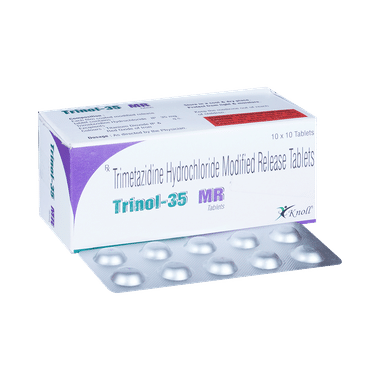
Angidine Retard Tablet MR is used to treat angina pectoris, a condition marked by chest pain due to reduced blood flow to the heart. It helps the heart work more efficiently by improving how it uses oxygen. It protects heart cells during reduced oxygen supply, helping reduce the number and severity of angina attacks.
Angidine Retard Tablet MR should be taken exactly as prescribed by your doctor, usually twice daily with meals. For best results, adopt heart-healthy habits like regular physical activity, quitting smoking, and following a balanced, low-fat diet. Do not skip doses or stop the medicine without medical advice. If you stop taking it, your symptoms may come back.
Common side effects of Angidine Retard Tablet MR include dizziness, headache, abdominal pain, or nausea. These side effects are generally mild and temporary. If any symptom persists or worsens, speak to your doctor. Taking the medicine with food may help reduce stomach discomfort.
Angidine Retard Tablet MR is not meant for treating sudden chest pain (acute angina). It should not be used in people with Parkinson’s disease, movement disorders, or severe kidney problems. Avoid driving or using machinery if you feel dizzy or unsteady while taking this medicine. Always inform your doctor about any other medications or health conditions you have.
Angidine Retard Tablet MR helps manage angina (chest pain) in patients with heart disease. It works by improving the efficiency of the heart’s energy use, helping heart muscle cells function better during reduced blood flow. This prevents sudden episodes of chest pain and allows patients to perform daily activities with less discomfort and improve their quality of life.
Side effects of Angidine Tablet MR
Most side effects do not require any medical attention and disappear as your body adjusts to the medicine. Consult your doctor if they persist or if you’re worried about them
Common side effects of Angidine
Dizziness
Headache
Abdominal pain
Rash
Indigestion
Itching
Red spots or bumps
Nausea
Vomiting
Weakness
Diarrhea
How to use Angidine Tablet MR
Take this medicine in the dose and duration as advised by your doctor. Swallow it as a whole. Do not chew, crush or break it. Angidine Retard Tablet MR should be taken with or after food.
How Angidine Tablet MR works
Angidine Retard Tablet MR is an anti-anginal medication. It decreases the oxygen requirement of the heart by shifting its metabolism from fats to glucose. As a result, the heart works more efficiently.
Safety advice
Alcohol
CONSULT YOUR DOCTOR
It is not known whether it is safe to consume alcohol with Angidine Retard Tablet MR. Please consult your doctor.
Pregnancy
CONSULT YOUR DOCTOR
The safety of Angidine Retard Tablet MR during pregnancy has not been established. There are no adequate and well-controlled studies in pregnant women, and animal data on reproductive toxicity are insufficient. Your doctor will weigh the benefits and any potential risks before prescribing.
Breast feeding
CONSULT YOUR DOCTOR
Information regarding the use of Angidine Retard Tablet MR during breastfeeding is not available. Please consult your doctor.
Driving
UNSAFE
Angidine Retard Tablet MR may decrease alertness, affect your vision, or make you feel sleepy and dizzy. Do not drive if these symptoms occur.
Kidney
CAUTION
Angidine Retard Tablet MR should be used with caution in patients with kidney disease. Dose adjustment may be needed. Use of Angidine Retard Tablet MR is contraindicated in patients with severe kidney disease.
Liver
CONSULT YOUR DOCTOR
There is limited data available on the use of Angidine Retard Tablet MR in patients with liver disease.
What if you forget to take Angidine Tablet MR?
If you miss a dose of Angidine Retard Tablet MR, apply it as soon as possible. However, if it is almost time for your next dose, skip the missed dose and go back to your regular schedule. Do not double the dose.
All substitutes
For informational purposes only. Consult a doctor before taking any medicines.
What were the side-effects while using Angidine Retard Tablet MR?
No Side Effec*
100%
*No Side Effect
How do you take Angidine Tablet MR?
With food
100%
Please rate Angidine Retard Tablet MR on price
Average
100%
FAQs
Is Angidine Retard Tablet MR a beta blocker?
No, Angidine Retard Tablet MR is not a beta blocker. It is an anti-anginal medicine used in combination with other medicines to treat angina pectoris (chest pain caused by coronary disease). It protects the heart cells from being affected by the reduced oxygen supply during an episode of angina.
Who should not take Angidine Retard Tablet MR?
Individuals who are allergic to trimetazidine or have severe kidney problems should not take Angidine Retard Tablet MR. Patients with Parkinson’s disease should also avoid taking the medicine. Parkinson’s disease is a disease of the brain that affects movement and causes trembling, rigid posture, slow movements, and a shuffling, unbalanced walk.
Can Angidine Retard Tablet MR be used in elderly patients?
Angidine Retard Tablet MR should be used with caution in patients aged more than 75 years of age. Usually, a lower dose is prescribed in elderly patients to reduce the chances of adverse effects. It is important to continuously monitor such patients.
Does taking Angidine Retard Tablet MR increase the risk of falling frequently?
Though it is rare, falls may occur with the use of Angidine Retard Tablet MR. This may be due to instability while walking or a fall in blood pressure while standing up. The risk may be higher in elderly patients. Therefore, they need to be more careful and should be monitored.
Does Angidine Retard Tablet MR cause drowsiness?
Yes, Angidine Retard Tablet MR may make you feel dizzy and drowsy. Therefore, you should avoid driving or using heavy machinery in case it causes these side effects.
How should Angidine Retard Tablet MR be taken?
You should take Angidine Retard Tablet MR exactly as prescribed by your doctor. Take it with a sufficient amount of liquid, e.g., a glass of water.
Tata 1mg's sole intention is to ensure that its consumers get information that is expert-reviewed, accurate and trustworthy. However, the information contained herein should NOT be used as a substitute for the advice of a qualified physician. The information provided here is for informational purposes only. This may not cover everything about particular health conditions, lab tests, medicines, all possible side effects, drug interactions, warnings, alerts, etc. Please consult your doctor and discuss all your queries related to any disease or medicine. We intend to support, not replace, the doctor-patient relationship.


 Prescription Required