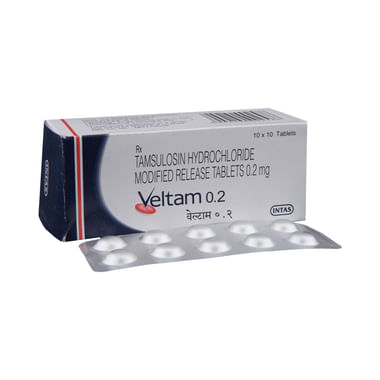

Geritam 0.2mg Tablet MR
 Prescription Required

Product introduction
Geritam 0.2mg Tablet MR is advised to take it in a dose and duration as per prescription. It may be taken with or without food, but take at the same time regularly. Swallow the medicine as a whole without crushing or chewing it. You should not stop taking the medicine without consulting the doctor as it may lead to the worsening of your symptoms. The course of the treatment should be completed for better efficacy of the medicine.
Use of this medicine can cause some common side effects such as dizziness, backe pain, chest pain, ejaculation disorder, and retrograde ejaculation. If any of the side effects persist or bother you, you must consult the doctor without delay.
Simple lifestyle changes can help you manage your symptoms better. Try to urinate as soon as you feel the urge, however, never strain or push to empty your bladder. You should avoid drinking caffeinated or alcoholic drinks at night and a few hours before going to bed or going out.
Before receiving the treatment, inform your doctor if you are on any medication for any other health condition. If you have to undergo eye surgery due to cataracts or glaucoma then inform your eye doctor about the usage of this medicine. Patients with liver disease must be cautious while receiving the prescription, and they must receive regular follow-ups as per the doctor’s advice.
Uses of Geritam Tablet MR
Benefits of Geritam Tablet MR
In Treatment of Benign prostatic hyperplasia
Side effects of Geritam Tablet MR
Common side effects of Geritam
- Chest pain
- Inflammation of the nose
- Dizziness
- Ejaculation disorder
- Headache
- Abdominal pain
- Back pain
- Nausea
- Infection
How to use Geritam Tablet MR
How Geritam Tablet MR works
Safety advice
Geritam 0.2mg Tablet MR is not indicated for use in women.
Geritam 0.2mg Tablet MR is not indicated for use in women.
What if you forget to take Geritam Tablet MR?
All substitutes
Quick tips
- Geritam 0.2mg Tablet MR helps in relieving the symptoms of enlarged prostate. It does not decrease the size of the prostate.
- Geritam 0.2mg Tablet MR must be taken with food.
- You will feel better within hours or days of starting the treatment. Full effect is usually seen within 2 weeks.
- Geritam 0.2mg Tablet MR may cause dizziness or sleepiness. Do not drive or do anything requiring concentration until you know how it affects you.
- If you are scheduled to undergo an eye surgery due to cataract or glaucoma, inform your eye doctor about the usage of Geritam 0.2mg Tablet MR.
- Inform your doctor if you have ever been diagnosed with kidney or liver problems.
Fact Box
Interaction with drugs
Patient concerns
FAQs
What is the best time to take Geritam 0.2mg Tablet MR?
Can the use of Geritam 0.2mg Tablet MR increase blood sugar levels?
Does Geritam 0.2mg Tablet MR cause weight gain?
When does Geritam 0.2mg Tablet MR start to work?
Can I take Geritam 0.2mg Tablet MR with vitamin D?
How does Geritam 0.2mg Tablet MR help in removal of kidney stones?
Why does Geritam 0.2mg Tablet MR cause dizziness?
Why should I stop taking Geritam 0.2mg Tablet MR before my cataract surgery?
Why does Geritam 0.2mg Tablet MR cause stuffy nose?
Is Geritam 0.2mg Tablet MR anticholinergic?
Can Geritam 0.2mg Tablet MR cause frequent urination?
What are the long-term effects of taking Geritam 0.2mg Tablet MR?
Apart from taking medicines, what should I do to manage my prostate symptoms?
Can I take Geritam 0.2mg Tablet MR with ibuprofen or paracetamol?
Want to share the information?


Disclaimer:
Tata 1mg's sole intention is to ensure that its consumers get information that is expert-reviewed, accurate and trustworthy. However, the information contained herein should NOT be used as a substitute for the advice of a qualified physician. The information provided here is for informational purposes only. This may not cover everything about particular health conditions, lab tests, medicines, all possible side effects, drug interactions, warnings, alerts, etc. Please consult your doctor and discuss all your queries related to any disease or medicine. We intend to support, not replace, the doctor-patient relationship.References
- Westfall TC, WestfallIn DP. Adrenergic Agonists and Antagonists. In: Brunton LL, Chabner BA, Knollmann BC, editors. Goodman & Gilman’s: The Pharmacological Basis of Therapeutics. 12th ed. New York, New York: McGraw-Hill Medical; 2011. p. 307.
- Robertson D, Biaggioni I. Adrenoreceptor Antagonists Drugs. In: Katzung BG, Masters SB, Trevor AJ, editors. Basic and Clinical Pharmacology. 11th ed. New Delhi, India: Tata McGraw Hill Education Private Limited; 2009. p. 153.
- Briggs GG, Freeman RK, editors. A Reference Guide to Fetal and Neonatal Risk: Drugs in Pregnancy and Lactation. 10th ed. Philadelphia, PA: Wolters Kluwer Health; 2015. p. 1314.
- Tamsulosin. Guildford, Surrey: Zentiva; 2017 [revised 29 Aug. 2018]. [Accessed 04 Apr. 2019] (online) Available from:

- Tamsulosin.Tokyo, Japan: Astellas, Pharma Inc; 2005. [Accessed 04 Apr. 2019] (online) Available from:
- Central Drugs Standard Control Organisation (CDSCO). Tamsulosin hydrochloride. [Accessed 04 Apr. 2019] (online) Available from:
Marketer details
Lab tests offered by us