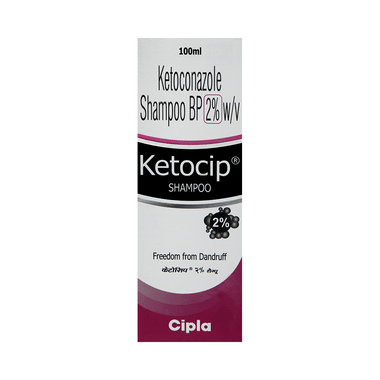

Megmadruff 2% Shampoo
 Prescription Required

Product introduction
Megmadruff 2% Shampoo is for external use only. Use it in the exact dose and duration advised by your doctor. Read the instructions thoroughly before using the medicine. Do not use it more than the recommended dose. Continue using it for as long as the doctor has prescribed. Avoid direct contact with your eyes. In the case of accidental contact, rinse it off thoroughly with cold water.
Common side effects of this medicine include burning, itching, irritation, and redness at the application site. Occasionally, it can cause thinning of your hair. These are not usually serious, but if they persist or get worse, let your doctor know. Your doctor may be able to suggest ways to reduce or treat them.
Before using Megmadruff 2% Shampoo, inform your doctor if you have a known history of allergic reaction to ketoconazole or any of the ingredients in this product. Let your doctor also know if you have recently used another medicine that contains a steroid or had an allergic reaction to another antifungal medicine. To make sure it is safe, pregnant and breastfeeding women should consult their doctor before using this medicine.
Uses of Megmadruff Shampoo
Benefits of Megmadruff Shampoo
In Treatment of Dandruff
Side effects of Megmadruff Shampoo
Common side effects of Megmadruff
- No common side effects seen
How to use Megmadruff Shampoo
How Megmadruff Shampoo works
Safety advice
What if you forget to take Megmadruff Shampoo?
All substitutes
Quick tips
- Megmadruff 2% Shampoo is used for the treatment and prevention of fungal infections of the skin and scalp, such as dandruff.
- Leave the shampoo on for three to five minutes before rinsing.
- Take care to avoid getting it in your eyes. If accidental exposure occurs, rinse immediately with plenty of water.
- Your usual shampoo can be used as necessary between treatments with Megmadruff 2% Shampoo.
Fact Box
Patient concerns
User feedback
FAQs
What is Megmadruff 2% Shampoo used for?
How should Megmadruff 2% Shampoo be used?
How long does it take to see results?
Can Megmadruff 2% Shampoo be used in children?
Are there any side effects of Megmadruff 2% Shampoo?
Want to share the information?


Disclaimer:
Tata 1mg's sole intention is to ensure that its consumers get information that is expert-reviewed, accurate and trustworthy. However, the information contained herein should NOT be used as a substitute for the advice of a qualified physician. The information provided here is for informational purposes only. This may not cover everything about particular health conditions, lab tests, medicines, all possible side effects, drug interactions, warnings, alerts, etc. Please consult your doctor and discuss all your queries related to any disease or medicine. We intend to support, not replace, the doctor-patient relationship.References
- Schimmer BP, Funder JW. ACTH, Adrenal Steroids, and Pharmacology of the Adrenal Cortex. In: Brunton LL, Chabner BA, Knollmann BC, editors. Goodman & Gilman’s: The Pharmacological Basis of Therapeutics. 12th ed. New York, New York: McGraw-Hill Medical; 2011. p. 1233.
- Bennett JE. Antifungal Agents. In: Brunton LL, Chabner BA, Knollmann BC, editors. Goodman & Gilman’s: The Pharmacological Basis of Therapeutics. New York, New York: McGraw-Hill Medical; 2011. p. 1576.
- Chrousos GP. Adrenocorticosteroids & Adrenocortical Antagonists. In: Katzung BG, Masters SB, Trevor AJ, editors. Basic and Clinical Pharmacology. 11th ed. New Delhi, India: Tata McGraw Hill Education Private Limited; 2009. p. 693.
- Briggs GG, Freeman RK, editors. A Reference Guide to Fetal and Neonatal Risk: Drugs in Pregnancy and Lactation. 10th ed. Philadelphia, PA: Wolters Kluwer Health; 2015. pp. 758-59.
- Ketoconazole [Drug Label]. Beerse, Belgium: Janssen Pharmaceutica N.V.; 2013. [Accessed 26 Jan. 2024] (online) Available from:

- Ketoconazole 2% w/w Shampoo [EMC SmPC]. Tipperary, Ireland: Pinewood Healthcare; 2023. [Accessed 26 Jan. 2024] (online) Available from:
- Ketoconazole 2% w/w Shampoo [Patient Information Leaflet]. Tipperary, Ireland: Pinewood Healthcare; 2015. [Accessed 26 Jan. 2024] (online) Available from:
- Ketoconazole [Patient Information Leaflet]. Beerse, Belgium: Janssen Pharmaceutica NV; 2014. [Accessed 26 Jan. 2024] (online) Available from:
- Draft Guidance on Ketoconazole. [Accessed 26 Jan. 2024] (online) Available from:
- FDA Label. Draft Guidance on Ketoconazole. 2012. [Accessed 20 Feb. 2024] (online) Available from:
- Ketoconazole [Summary of Product Characteristics]. Bangalore, India: Micro Labs Limited; 2021.
Marketer details
Lab tests offered by us