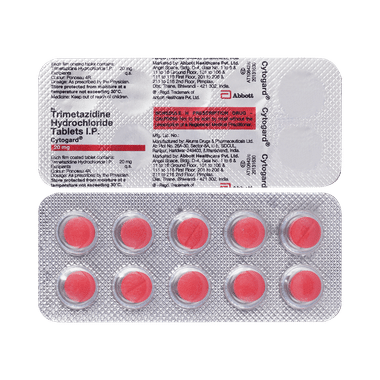

TETAZ 20MG TABLET
 Prescription Required

Product introduction
TETAZ 20MG TABLET should be taken exactly as prescribed by your doctor, usually twice daily with meals. For best results, adopt heart-healthy habits like regular physical activity, quitting smoking, and following a balanced, low-fat diet. Do not skip doses or stop the medicine without medical advice. If you stop taking it, your symptoms may come back.
Common side effects of TETAZ 20MG TABLET include dizziness, headache, abdominal pain, or nausea. These side effects are generally mild and temporary. If any symptom persists or worsens, speak to your doctor. Taking the medicine with food may help reduce stomach discomfort.
TETAZ 20MG TABLET is not meant for treating sudden chest pain (acute angina). It should not be used in people with Parkinson’s disease, movement disorders, or severe kidney problems. Avoid driving or using machinery if you feel dizzy or unsteady while taking this medicine. Always inform your doctor about any other medications or health conditions you have.
Uses of Tetaz Tablet
Benefits of Tetaz Tablet
In Angina (heart-related chest pain)
Side effects of Tetaz Tablet
Common side effects of Tetaz
- Abdominal pain
- Dizziness
- Headache
- Rash
- Indigestion
- Itching
- Red spots or bumps
- Nausea
- Vomiting
- Weakness
- Diarrhea
How to use Tetaz Tablet
How Tetaz Tablet works
Safety advice
Use of TETAZ 20MG TABLET is contraindicated in patients with severe kidney disease.
What if you forget to take Tetaz Tablet?
All substitutes
Quick tips
- Take TETAZ 20MG TABLET with food to reduce the chance of stomach upset and improve absorption.
- Take it regularly at the same time each day for best results and don’t skip doses.
- Do not use for sudden chest pain (acute angina attacks); it is meant for long-term management.
- Avoid driving or operating machinery if you feel dizzy or unsteady while on this medicine.
Fact Box
Patient concerns
FAQs
Is TETAZ 20MG TABLET a beta blocker?
Who should not take TETAZ 20MG TABLET?
Can TETAZ 20MG TABLET be used in elderly patients?
Does taking TETAZ 20MG TABLET increase the risk of falling frequently?
Does TETAZ 20MG TABLET cause drowsiness?
How should TETAZ 20MG TABLET be taken?
Want to share the information?


Disclaimer:
Tata 1mg's sole intention is to ensure that its consumers get information that is expert-reviewed, accurate and trustworthy. However, the information contained herein should NOT be used as a substitute for the advice of a qualified physician. The information provided here is for informational purposes only. This may not cover everything about particular health conditions, lab tests, medicines, all possible side effects, drug interactions, warnings, alerts, etc. Please consult your doctor and discuss all your queries related to any disease or medicine. We intend to support, not replace, the doctor-patient relationship.References
- CiplaMed. Trimetazidine dihydrochloride [Prescribing Information]. [Accessed 29 Apr. 2025]. (online) Available from:

- Trimetazidine [Summary of Product Characteristics]. Suresnes, France: Les Laboratoires Servier; 2021. [Accessed 29 Apr. 2025]. Available from:
- Ciapponi A, Pizarro R, Harrison J. WITHDRAWN: Trimetazidine for stable angina. Cochrane Database Syst Rev. 2017 Mar 20;3(3):CD003614. Accessed 29 Apr. 2025]. (online) Available from:
- MIMS, Philippines: Trimetazidine [Generic Medicine Information]. [Accessed 29 Apr. 2025]. (online) Available from:
- Trimetazidine dihydrochloride [Prescribing Information]. Indrad, Mehsana: Torrent Pharmaceuticals Ltd. [Accessed 29 Apr. 2025]. (online) Available from:
- Central Drugs Standard Control Organisation (CDSCO). [Accessed 19 Mar. 2019] (online) Available from:
Marketer details
Lab tests offered by us