Sign in to your account
or
By signing in you agree to our
Terms & conditions
 and 
Privacy policy

Etoricoxib + Thiocolchicoside

Written By Dr. Sakshi JainReviewed By Dr. Rajeev Sharma
Last updated 13 Jun 2023 | 11:25 AM (UTC)

Etoricoxib + Thiocolchicoside Uses

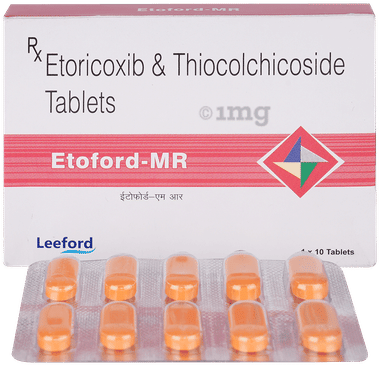
Etoricoxib+Thiocolchicoside is used in the treatment of pain due to muscle spasm.

Available generics for Etoricoxib + Thiocolchicoside

Order with generics and save upto 50%
How Etoricoxib + Thiocolchicoside works

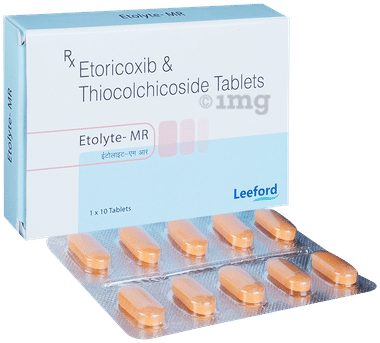
Etoricoxib + Thiocolchicoside is a combination of two medicines: Etoricoxib and Thiocolchicoside, which relieves pain and relaxes the muscles. Etoricoxib is a non-steroidal anti-inflammatory drug (NSAID) which works by blocking the release of certain chemical messengers that cause pain and inflammation (redness and swelling). Thiocolchicoside is a muscle relaxant. It works on the centers in the brain and spinal cord to relieve muscle stiffness or spasm and to improve pain and movement of muscles.

Common side effects of Etoricoxib + Thiocolchicoside

Diarrhea, Flatulence, Dizziness, Abdominal pain, Constipation, Gastritis, Dyspepsia, Nausea, Vomiting, Oral ulcer, Dry socket, Edema (swelling), Drowsiness, Headache, High blood pressure, Increased alanine aminotransferase, Increased aspartate aminotransferase, Ecchymosis (discoloration of the skin resulting from bleeding underneath)
prefix_icon
Get medicines for Etoricoxib + Thiocolchicoside
suffix_icon
Authenticity

Want to Know More

Read Our Editorial Policy

Expert advice for Etoricoxib + Thiocolchicoside

  • Etoricoxib + Thiocolchicoside helps relieve pain due to muscle spasm.
  • It may cause dizziness and fatigue. Do not drive or do anything requiring concentration until you know how it affects you.
  • Avoid consuming alcohol when taking Etoricoxib + Thiocolchicoside as it may cause excessive drowsiness. 
  • Regularly monitor your blood pressure while taking this medicine, particularly in the first two weeks after starting treatment.
  • Inform your doctor if you have a history of stomach ulcers, heart diseases, high blood pressure, and liver or kidney disease.
  • Inform your doctor if you notice yellowing of eyes or skin, dark urine, or stomach pain.